
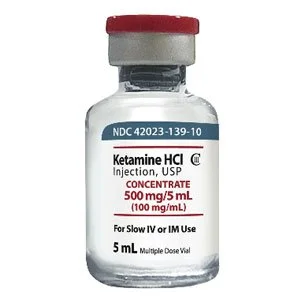
Ketamine HCL
Price range: €225.00 through €1,000.00
Buy Ketamine HCL – Use, effects and safety in oral surgery
Overview: Why Ketamine HCL is indispensable in modern dental surgery
Imagine walking into a dentist’s office with a pounding heart and sweaty hands. The thought of the procedure terrifies you. This is where ketamine HCL comes in – a medication that not only relieves pain but also reliably puts patients into a deep, anxiety-free state.
Ketamine hydrochloride, internationally known as Ketamine Hydrochloride Injection, USP, is a proven anesthetic with unique properties: rapid onset of action, potent analgesia, and the ability to maintain airway protective reflexes. In oral surgery, ketamine established as a safe and effective solution – especially for complex procedures or anxious patients.
What is Ketamine HCL?
Ketamine is a so-called dissociative anesthetic characterized by rapid onset, pronounced pain relief, and reliable sedation. Unlike other anesthetics, it preserves important bodily functions such as spontaneous respiration and circulatory stability—a tremendous advantage in surgical dentistry.
Form and administration
- formulation: Sterile injection solution in concentrations of
- 10 mg / mL
- 50 mg / mL
- 100 mg / mL
- Application routes:
- Intravenous (IV)
- Intramuscular (IM)
The solution is preservative-free and is administered exclusively under sterile conditions.
Areas of application in dentistry
In the oral and maxillofacial surgery Ketamine is regularly used – for example in:
- Removal of impacted wisdom teeth
- Bone augmentation and implantations
- Renovations under general anesthesia
- Complex maxillofacial surgical procedures
- Patients with dental phobia or low pain sensitivity
The combination of deep sedation, pain-free procedure and Stability of vital functions makes Ketamine HCL the preferred choice in difficult cases.
Advantages of Ketamine HCL in practice
| Advantage | Description |
|---|---|
| Quick onset of action | Effect within 30 seconds (IV) or 3-4 minutes (IM) |
| Strong analgesia | Provides deep pain relief, ideal for surgical procedures |
| Airway stability | Reflexes are preserved, low risk of respiratory depression |
| Cardiovascular stability | Particularly suitable for high-risk patients with circulatory weakness |
| Combination with benzodiazepines | Midazolam reduces possible hallucinations or awakening reactions |
Scientific findings and expert opinions
In a study by American Association of Oral and Maxillofacial Surgeons (AAOMS) found that ketamine-assisted sedation significantly contributes to a calmer, complication-free surgical procedure. According to Dr. Müller, an anesthesiologist in Munich:
“Ketamine is a valuable component of dental anesthesia, especially for highly anxious patients or during long procedures – safe, effective, and easily controlled.”
Personal experience report from practice
Ms. Anna R., 46, had been afraid of dental treatment for years. She was due to have jaw reconstruction, which she had been putting off for a long time. Only after a preliminary consultation in which she was offered ketamine sedation did she agree to it.
“I didn’t feel anything, I wasn’t scared—and when I woke up, I felt relaxed. It was as if I had just slept. I would do it again anytime.”
Instructions for use and safety
Professional implementation
- Only by trained personnel
- Monitoring of vital parameters throughout the entire procedure
- Dose adjustment depending on the procedure, body weight and reaction
important safety instructions
- Possible side effects:
- Hallucinations or unpleasant dreams (so-called Emerging Phenomena)
- Increased saliva production
- Contraindications:
- Hypersensitivity to ketamine
- Severe cardiovascular diseases
- Increased intracranial pressure
- Severe pre-existing psychiatric conditions
- Be careful with:
- Pregnancy (only if clearly indicated)
- Combination with other sedatives or alcohol
Comparison with other sedatives
| active substance | respiratory depression | Depth of sedation | Circulatory stability | analgesia |
|---|---|---|---|---|
| ketamine | Low | Deep | Very stable | Stark |
| propofol | High | Deep | Unstable possible | Weak |
| Midazolam | Medium | Medium | Stabil | Weak |
| Fentanyl | High | Stark | Unstable possible | Very strong |
FAQs about Ketamine HCL
How quickly does ketamine work?
When administered intravenously in approx. 30 seconds, intramuscularly after 3 to 4 minutes.
How long does the effect last?
Depending on the dosage, between 10 and 30 minutes. Post-sedation is possible if needed.
Is ketamine dangerous?
When used properly and under supervision, it is considered very safe.
How is the risk of hallucinations minimized?
By combining it with benzodiazepines such as midazolam, the risk can be greatly reduced.
Can general anesthesia be achieved with ketamine HCL?
Yes, especially in combination with other medications, complete anesthesia is achieved.
Ketamine HCL as a modern solution for pain-free dental treatments
Buying Ketamine HCL means more than just purchasing another anesthetic—it means having a solution for patient comfort, safe surgical procedures, and rapid recovery. With its unique mode of action, it combines the best of sedation, pain relief, and vitality maintenance.
Whether for dentists with complex operations or for clinics with a high proportion of anxious patients: Ketamine HCL offers a proven, scientifically supported option that is the modern standard today – and will become even more important in the future.
| Qantity | 10 bottles 500 mg/5 ml vials, 20 bottles 500 mg/5 ml vials, 50 bottles 500 mg/5 ml vials |
|---|
Be the first to review “Ketamine HCL”
Related products
Dissociatives & Sedatives
Dissociatives & Sedatives
Dissociatives & Sedatives
Opioids
Other Sedatives
Pain Relief
Other Sedatives

Pain Relief
Reviews
There are no reviews yet.